
Plan around statement and due-date cycles
Statement cycles, due dates and month-end can concentrate follow-up work. Use the selected segment’s actual volume and contact restrictions to plan a pilot the team can supervise.
Explore AI workforce orchestration for financial servicing: prepare account follow-up and review payment records, with specialists handling hardship, disputes and exceptions.

Decision boundaries
Acts within policy
2 example workflows start hereExpand autonomy only after reviewing results.Acts with approval
Thresholds and gates apply to anything with cost or risk attached.Stays human, permanently
4 industry requirements set the boundaries.
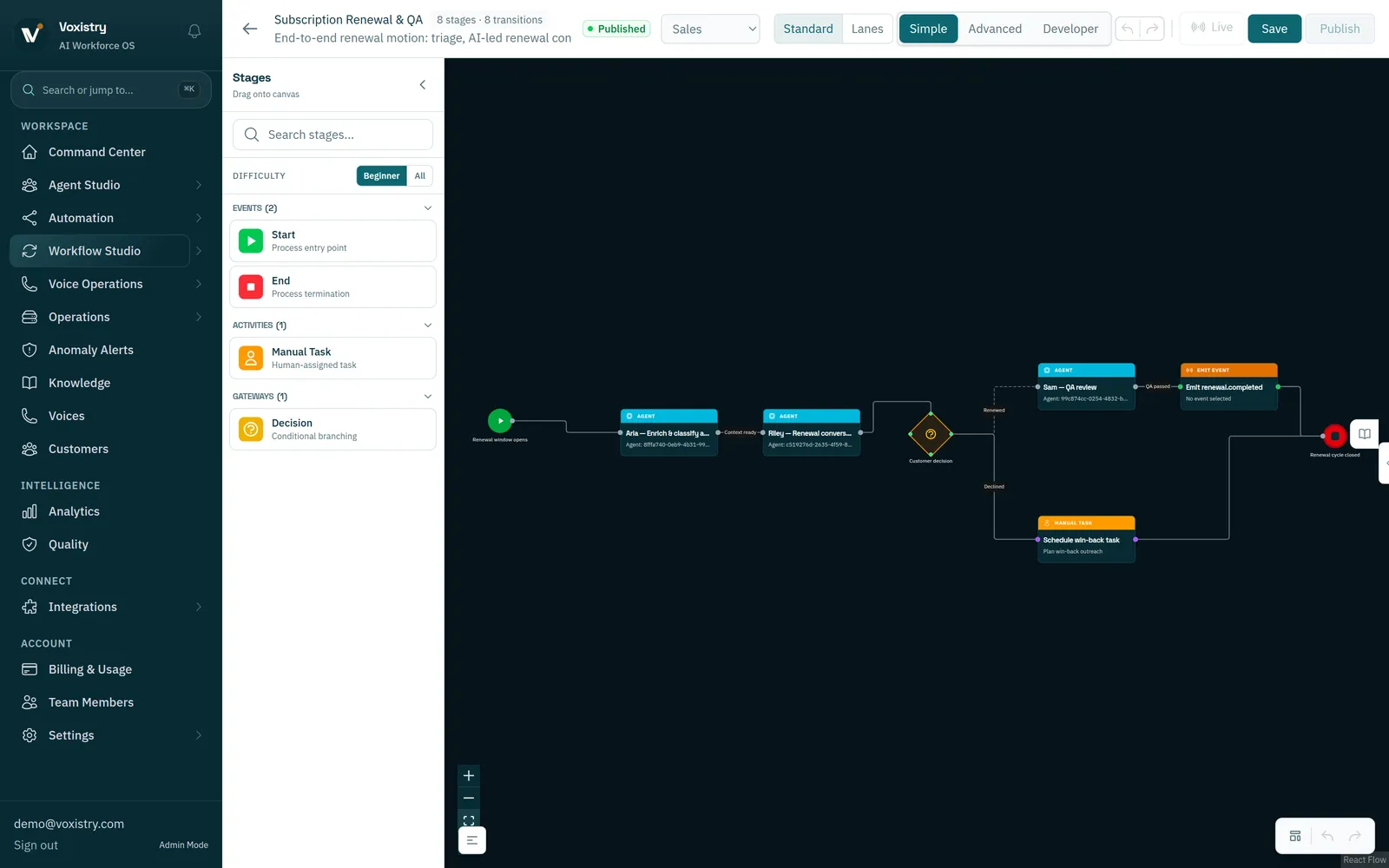
Start with one portfolio segment where the operations team can explain the contact rules, approved options and account records. Use AI workers to prepare routine follow-up and proposed next steps while staff review uncertainty and specialists handle hardship, disputes and exceptions. Check accepted account updates and specialist requests alongside customer complaints and confirmed payment outcomes. Agree the evidence and human coverage with the responsible owners before widening the workflow.
Statement cycles, due dates and month-end can concentrate follow-up work. Use the selected segment’s actual volume and contact restrictions to plan a pilot the team can supervise.
An attempted call is different from reaching the account holder or agreeing a useful next step. Review those stages separately so volume alone does not stand in for progress.
Separate servicing, collections and relationship records can lead to repeated contact or missed preferences. Check which teams and systems share the selected segment’s contact history.
Use the customer’s recorded permissions and preferences when selecting a channel. Review response, repeat contact and complaints during the pilot instead of assuming how a demographic will respond.
Measure the effort needed for the agreed identity checks and the number of uncertain results needing staff review. A shorter conversation must still meet the approved disclosure requirements.
Compare what the customer and team agreed with the record accepted by the account system. Delayed or rejected updates need an owner so later follow-up uses the correct information.
Identify which conversations can be reviewed with the available recordings, languages and scoring setup. Measure missing coverage and compare automated flags with staff review before relying on them.
Missing or incorrect terms can create avoidable follow-up. Track update failures and corrections, and use confirmed payment records when assessing whether an arrangement was kept.
Trained specialists assess individual circumstances and decide any change to terms. Workers can prepare the available context, while the team tracks whether a specialist has accepted the request.
Workers record the reported disagreement for review. A responsible handler checks the account evidence and decides the response; the worker does not adjudicate the balance.
Decisions with consequences for a customer's credit file need a person accountable for them, by name, in the record.
The responsible team defines complaint handling and applicable deadlines. Workers can prepare the reported concern and available history, with a named person accepting the case and deciding the response.
Permission can change and differ by channel. Define how a withdrawal reaches each selected contact pathway, then test pending attempts and failed updates before relying on suppression.
Have the responsible compliance and operations owners define contact timing and frequency for the selected product and market. Test how each pathway applies those requirements before outreach.
Agree what identity checks permit account discussion. Test failed, incomplete and uncertain checks, including whether restricted information remains unavailable to the conversation.
Keep hardship and vulnerability decisions with trained staff. Define how reported concerns stop routine handling, then test recognition, specialist acceptance and unavailable-staff responses.
Choose one account segment and operations owner. Workers prepare follow-up and proposed next steps; staff review contact eligibility, approved options and the records needed for later action.
ExploreTest whether arrangements and contact preferences are accepted by the account system. Check failed updates, uncertain identity and specialist acceptance before enabling the agreed worker actions.
ExploreCompare repeated or restricted attempts, update failures, accepted specialist requests and confirmed payment outcomes. Review permissions, records and human coverage again before adding another segment or channel.
Explore